
Paul’s Antai-ji yearbook entry 2025
I could write about how I had lost sight of the various reasons that I had to come to Antaiji already
shortly after I arrived and then how getting used to the demanding schedule and all the new
responsibilities, as well as a talk with a retreat-guest during a stressful phase, helped me to
remember what I had no longer been aware of—by that gaining a lot of comfort and ease back.
Or, I could write about how Antaiji, the diverse tasks and the harvest changes over the course of
the year. That I never have kept track of the seasons as much as here, at a pretty much self-
sufficient temple, or been aware of the nature surrounding me due to mostly living in concrete
jungles where I could buy non-seasonal products if I just wanted at any time. Grasping original,
rural nature in major cities is harder, but they obviously are a part of nature as a whole. I could also
share about the 10 days that I was able to travel through Japan so far or write about my
expectations for the remainder of my first year at Antaiji, which started in March after most of the
snow had melted. And as if that would not be enough, I could write about the Zen-elements and
the special Zazen focus of this temple, the unique schedule, menus, a rudimentary lifestyle and
more. I met so many kind and loving people and made contacts with people all around the world
just by being in one place all year long. Even though it is very stressful in Antaiji, I discovered
cooking and baking as something I started to enjoy and love. Also, growing one’s own vegetables
is something I started to adore. Oh, and … nostalgia and homesickness are beasts to tame as
well. I could describe the smells of Antaiji that you stop noticing as you get used to scents and
stinks of a place over time. Japanese sleeping, eating, bathing and toilet habits are also a topic a
European could digress about. Also worth mentioning: the work ethic of the residents and how
physical and mental exertion turn snacks into long-awaited feasts. Especially in the time after
arrival, there is little to no free time. But, in the end, is there any time we are ever really free? Tora,
the temple’s cat: most of us could address him as “Tora-senpai”, as he has been here for longer
than many of the residents, but variations of “miaow” also do their job when trying to attract his
attention. This cat reminded me of many things and taught me quite a lot. Rice, fences, small or big
animals and so much more … The 7-days-rohatsu-sesshin just came to an end; so that definitely
would be a chapter for itself.
And that’s just mine of many records and what I experienced during what will soon be a year. To be
honest, this is growing into more of a collection of memory hints for my future self than it is a good
insight into temple life for people reading this blog. Also, I think all of the above people have
already captured on video, written or talked about enough and it can be found on the internet. I
learned myself that reading about something can give you a first taste of it, but the personal
experience will most likely be different and more “whole/full”—a phenomenological or empiric
experience. Although the words of a contemporary, famous and partially infamous German
philosopher, which just came to my mind now, still apply, it is not the same as making the
experience yourself:
“Sich mit […] Gedanken zu beschäftigen, sie nachzuzeichnen, sie zu verstehen und
weiterzudenken ist eine kulinarische Beschäftigung des Geistes. Lesen ist Denken mit einem
fremden Gehirn. Doch das Gelesene zu verarbeiten ist ein fortwährender Dialog mit uns selbst.
Was lockt, ist die Aussicht [eigenständig], intelligenter über die Welt nachdenken zu können als
zuvor.”
Richard D. Precht, Erkenne die Welt
“Engaging with thoughts, tracing them, understanding them, and developing them further is a
culinary pursuit of the mind. Reading is thinking with someone else’s brain. But processing what
we read is a continuous dialogue with ourselves. What’s enticing is the prospect of being able to
think about the world more intelligently than before [independently].”
(Yes, that is me doing what you might be too lazy for or, for some other reason, not willing to do:
copy-paste the German section into some translator.)
If you have been thinking about ‘staying at Antaiji for a longer time period’, sure, request a stay and
thereby not just “process”, as the quote already emphasizes, but additionally experience yourself
what you have read or heard about. But, let me stress this once more: do not take all the talk about
how hard it can be to stay at Antaiji lightly and, if you come from overseas, maybe keep your
environmental footprint and what you will leave behind in mind as well. It also might make sense to
start your practice here and now (more precise: there and now), to notice and appreciate what you
already are or what already surrounds you (well, trying to not sound patronizing here).
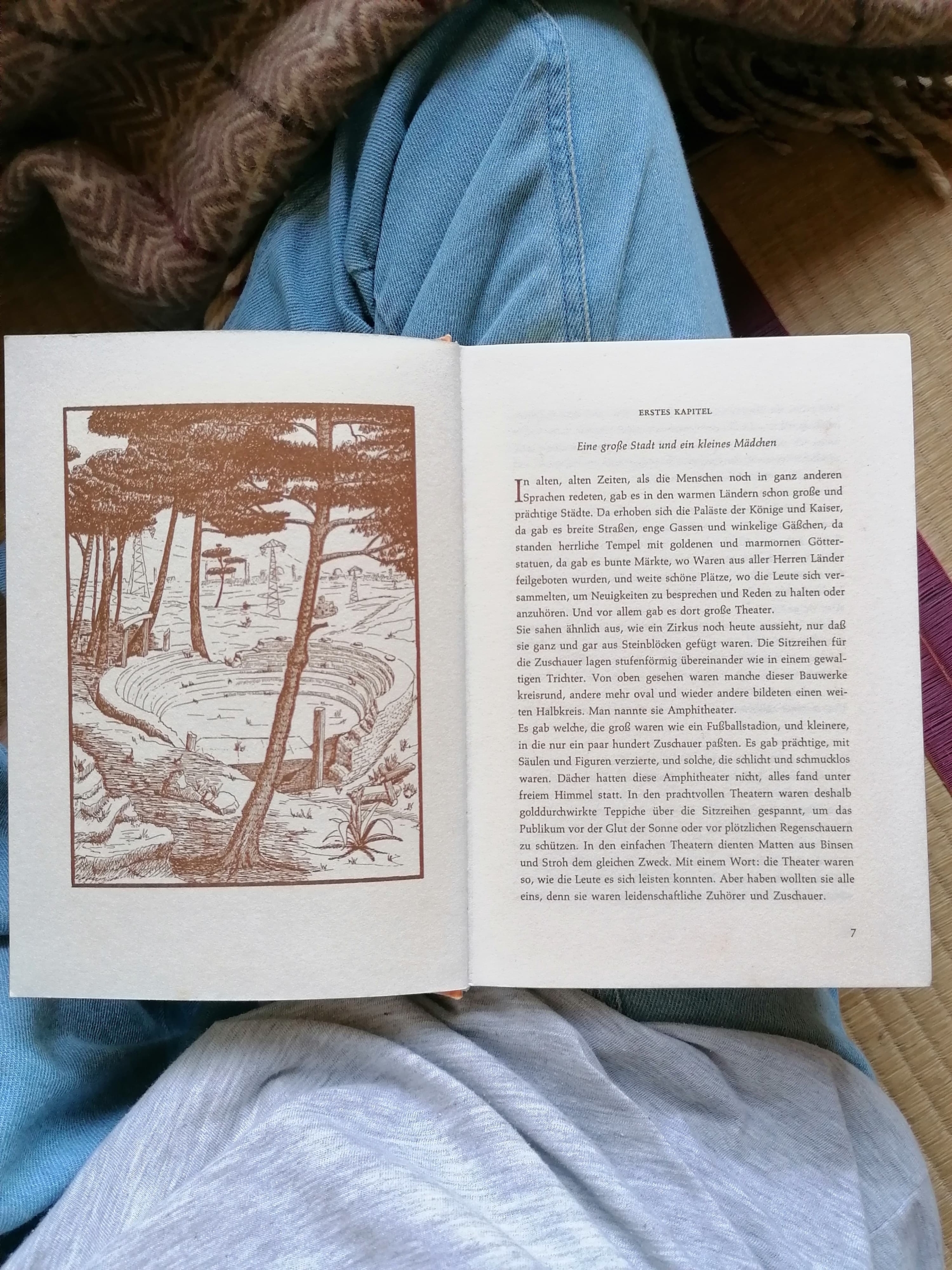
In the end, instead of elaborating on one of the countless topics from above, I decided on a 180-
degree turn—sharing a poem from the german child-book “Momo”. It is not your usual Zen
literature but it has its teachings for sure. I found it in our library here.
PS: I hope the publisher does not claim its copyright. :/
PPS: Thanks to Tamara and Iain for arousing my interest in reading it again just before I found it
here.
„Drei Brüder wohnen in einem Haus,
die sehen wahrhaftig verschieden aus,
doch willst du sie unterscheiden,
gleicht jeder den anderen beiden.
Der erste ist nicht da, er kommt erst nach Haus.
Der zweite ist nicht da, er ging schon hinaus.
Nur der dritte ist da, der Kleinste der drei,
denn ohne ihn gäb’s nicht die anderen zwei.
Und doch gibt’s den dritten, um den es sich handelt,
nur weil sich der erst’ in den zweiten verwandelt.
Denn willst du ihn anschaun, so siehst du nur wieder
immer einen der anderen Brüder!
Nun sage mir: Sind die drei vielleicht einer?
Oder sind es nur zwei? Oder ist es gar – keiner?
Und kannst du, mein Kind, ihre Namen mir nennen,
so wirst du drei mächtige Herrscher erkennen.
Sie regieren gemeinsam ein großes Reich —
und sind es auch selbst! Darin sind sie gleich.“
Michael Ende, Momo