




Muhos Vortrag ueber „Zen fuer Kueche und Leben“ aus dem Jahr 2011
Diesen Winter studieren wir gemeinsam die Texte „Tenzokyokun“ und „Chijishingi“ von Dogen.
Bei beiden Texten handelt es sich um inzwischen fast 800 Jahre alte Klosterregeln, der erste speziell fuer den Koch, der zweite fuer die verschiedenen Verantwortlichen in der Gemeinschaft.
Das „Tenzokyokun“ ist unter dem Titel „Zen fuer Kueche und Leben“ auch in deutscher Uebersetzung mit Kommentaren von Uchiyama Roshi erhaeltlich. Gestern haben wir den letzen Teil dieses Textes besprochen, heute war Dosen mit dem ersten Vortrag ueber das „Chijishingi“ (das es leider noch nicht in deutscher Uebersetzung gibt) an der Reihe.
Der Vortrag unten ist nicht aktuell. Muho sprach vor sechs Jahren in Saarbruecken ueber das „Tenzokyokun“:
Murilo reads and explains today’s part of the „Tenzo kyokun“, January 27th 2017
Before Murilo’s English talk, Kanda reads the original text by Dogen:
The Japanese original can be found here:
https://antaiji.org/archives/jap/ten.shtml
Next, Murilo reads the English translation by Leigthon/Okumura:
Different versions on the Internet:
Instructions for the Cook (Stanford translation)
INSTRUCTIONS FOR THE TENZO (translated by Anzan Hoshin & Yasuda Joshu)
At the beginning of the next video, Murilo quotes from the „Adult practice“ articles:
Three and a half years ago, when I became the abbot of Antaiji, I had to attend a two-day seminary at the Soto headquarters in Tokyo (which by the way also functions as „Grand Hotel Tokyo“), where they taught you all you need to know to be a full-fledged Buddhist priest. One of the lectures was about „the attitude that a resident priest should have“. Hearing this lecture, first I was surprised to learn that a resident priest gains an income from living in the temple. As both the priest and his whole family live for free in the temple precincts, I wouldn’t be so surprised to hear that he is paying to live in the temple – but why should he be paid? As far as I know, none of the abbots at Antaiji ever received an income for being the abbots of Antaiji. The lecturer proceded to proclaim that he received „only 350.000 Yen“ (about 3000 dollars) of income from the temple each month, but as he had no children and also worked part time at Komazawa University, spending the rest of his time growing vegetables at his temple, he „gets along all right“. What the hell is he using 350.000 Yen per month for […]
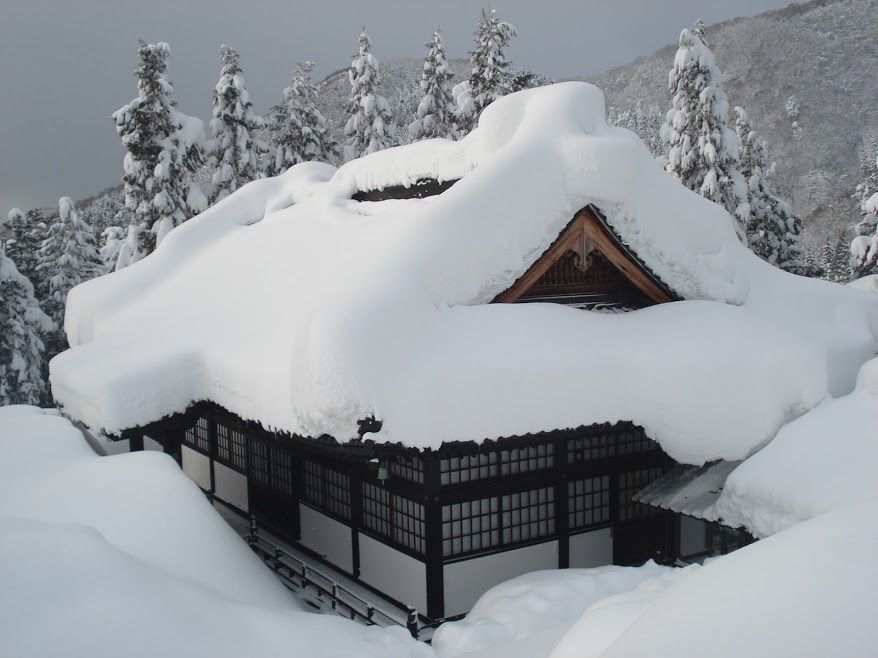
Gang um die verschneite Halle, und Studienkreis am Vormittag (Japanisch und ein bisschen Englisch), 23. Januar 2017
Today, Ochi spoke about the famous episode when Dogen met a Chinese cook on the ship, after arriving in China. First Ochi treads the original, then Fernanda reads the English text (second and sixth video), after that Ochi explains in Japanese:
Original Japanese text can be found here: antaiji.org/archives/jap/ten.shtml
Fernanda reads the English translation by Leigthon/Okumura:
Different version on the Internet:
Instructions for the Cook (Stanford translation)
INSTRUCTIONS FOR THE TENZO (translated by Anzan Hoshin & Yasuda Joshu)
Last, we chant the four bodhisattva vows:
Explanation of the vows can be found here:https://en.wikipedia.org/wiki/Bodhisattva_vow#East_Asia
Muhos verspätete Neujahrsgrüße, 19. Januar 2017
Vortrag von Volker Zotz:
Zeitschrift: „Tibet und Buddhismus“
Trailer „Zen for Nothing“:
Hoerspiel: „Zen ist die größte Lüge aller Zeiten“
Kôdô Sawaki’s neues Buch: „ZEN IST FÜR NIX GUT“