


July and August 2013 This month at Antaiji
It is wet and hot, and everything is growing fast.
Zen on Youtube
Seikan from Melbourne uploaded two new videos:
Also “Zen”, a two hour movie about Dogen’s life can be found on Youtube:)


It is wet and hot, and everything is growing fast.
Seikan from Melbourne uploaded two new videos:
Also “Zen”, a two hour movie about Dogen’s life can be found on Youtube:)
We finished planting the rice in May, and are now busy weeding the fields, cutting grass and caring for the summer vegetables. Potatoes will be harvested around the end of June. That will also be the season when the hortensia flowers will be most beautiful. We entered the annual rainy season already, but did not have much rain so far…
If you are in France or Germany, you can watch a program called “Zen gardens – enlightenment in stone” on June 6th or 13th. There should be some takes of Antaiji as well, featuring abbot Muho with a black eye. Link to the description at “Arte” channel: http://www.arte.tv/guide/de/047068-000/zen-garten(German) or http://www.arte.tv/guide/fr/047068-000/zenitude-et-plenitude (French)
Here is the part about Antaiji in French:
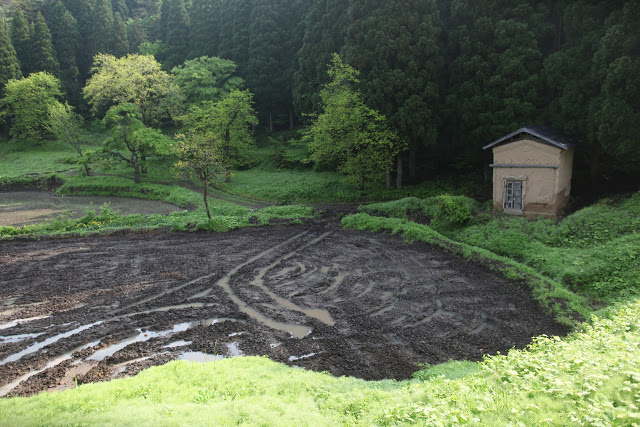 The snow melted in March and the Antaiji practioners are back in the fields, plowing, seeding and weeding. There are also lots of trees to be cut, a stone wall to be build where we extend a rice field, and a new water supply to be made. We still accept practioners, but people who come to Antaiji should be prepared to stay for three years (to be able to contribute to the self-suffivient lifeI and speak basic Japanese.
Samu (labor) takes places on the days between sesshin:
Raising the rice paddies and reparing the rice fields.
Plowing the vegetable fields and sowing seeds (potatoes, tomatoes, cucumbers, pumpkins, bell peppers, eggplants and lots of greens).
Digging for bamboo shoots and collecting other wild herbs.
Extending the new rice field andf buildign a stone wall.
Cutting trees, chopping wood.
Repairing the roof.
Plumber work to create a new water supply.
The snow melted in March and the Antaiji practioners are back in the fields, plowing, seeding and weeding. There are also lots of trees to be cut, a stone wall to be build where we extend a rice field, and a new water supply to be made. We still accept practioners, but people who come to Antaiji should be prepared to stay for three years (to be able to contribute to the self-suffivient lifeI and speak basic Japanese.
Samu (labor) takes places on the days between sesshin:
Raising the rice paddies and reparing the rice fields.
Plowing the vegetable fields and sowing seeds (potatoes, tomatoes, cucumbers, pumpkins, bell peppers, eggplants and lots of greens).
Digging for bamboo shoots and collecting other wild herbs.
Extending the new rice field andf buildign a stone wall.
Cutting trees, chopping wood.
Repairing the roof.
Plumber work to create a new water supply.
 |
On the night before each long sesshin, the abbot gives a talk on Adult practice.
On the days before one day sesshins, the practioners take terms lecturing on: Shobogenzo Zuimonki
The practioners read the text, explain it and reflect on how it relates to their own practice and their life here.